
VR Reformas
VR
Client
Venture Building, AI Product Validation, UX Design, Product Concept
Services
2023
VR wanted to expand its super app into a new category with real relevance for working-class families. We shaped an MVP vision that combined AI-assisted planning, payroll-deducted financing, marketplace access, and embedded education to reduce friction from planning to execution. OUTCOMES The work transformed “dignified housing” from a strategic idea into a clearer business case — identifying R$22.1B in financing potential, R$15.8B in labor/services, and R$6B in materials, while validating that users trusted VR (9.5/10) and engaged meaningfully with the proposition (76.6% completion rate).
MY ROLE: Product Leader I was responsible for turning a broad strategic ambition into a shippable product direction. I personally led: -MVP framing + product narrative (what it is / why now / why VR) -defining the riskiest assumptions and the validation plan -shaping the end-to-end journey logic (from intent → completion) - positioning generative AI as both experience value and early traction mechanism -aligning stakeholders through clear artifacts and decision-ready storytelling Credits Mariana Vendemiatti (Thesis Leader) Alexandre Paranaguá (Product Leader) Paulo Victor Coelho (Tech Leader) Wendy Carvalho (Business Analyst) Pedro Carvalho (Designer)

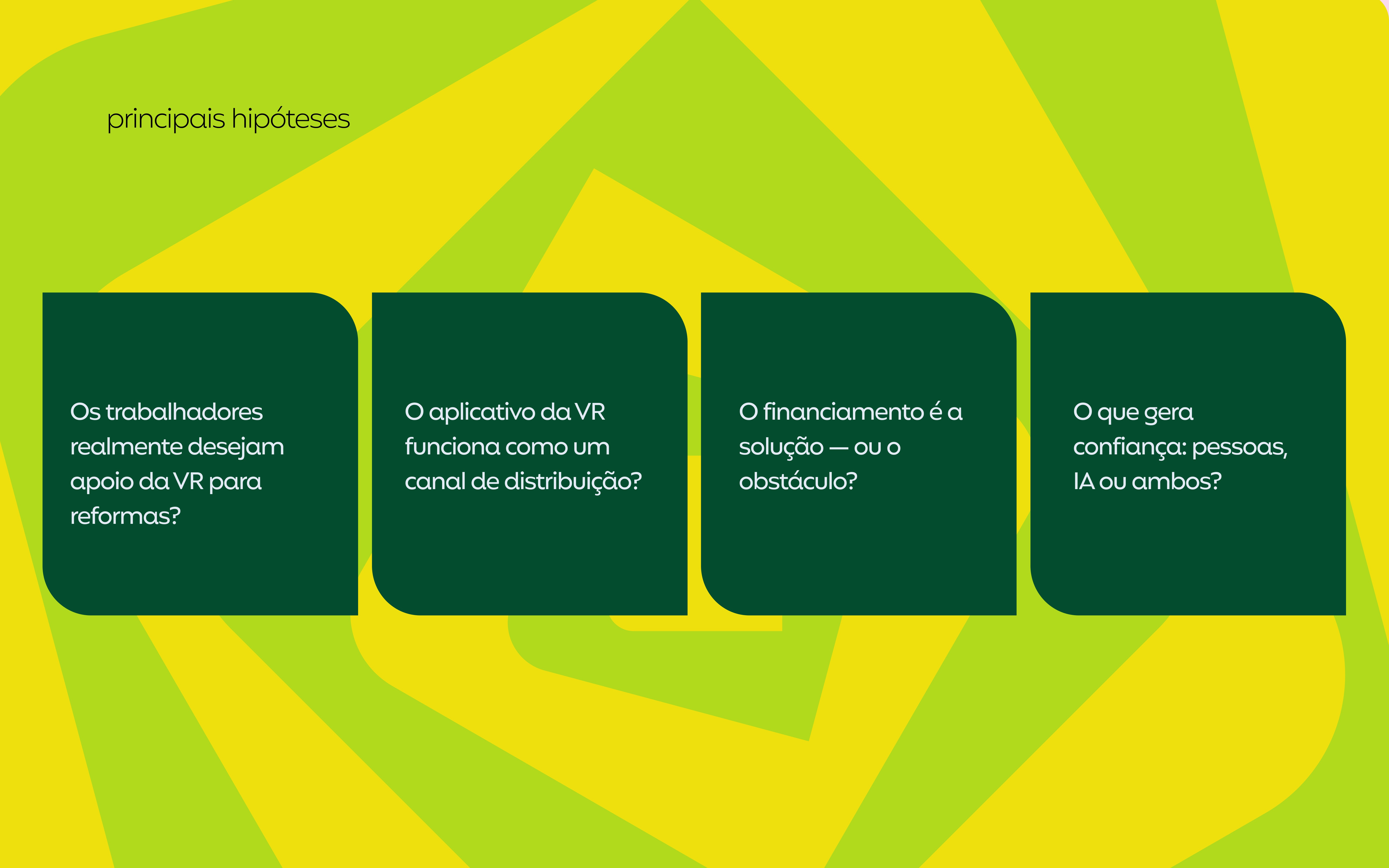
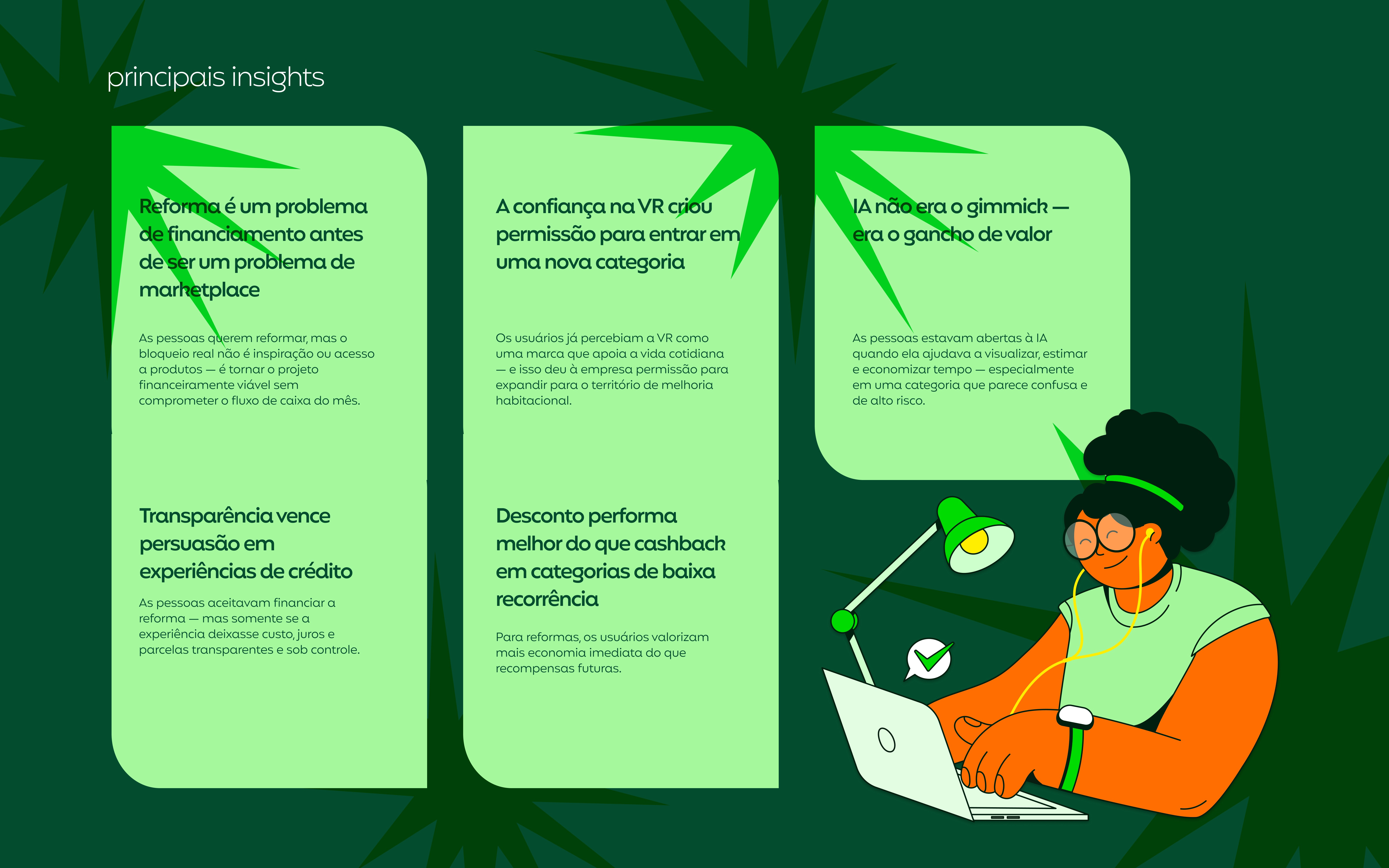
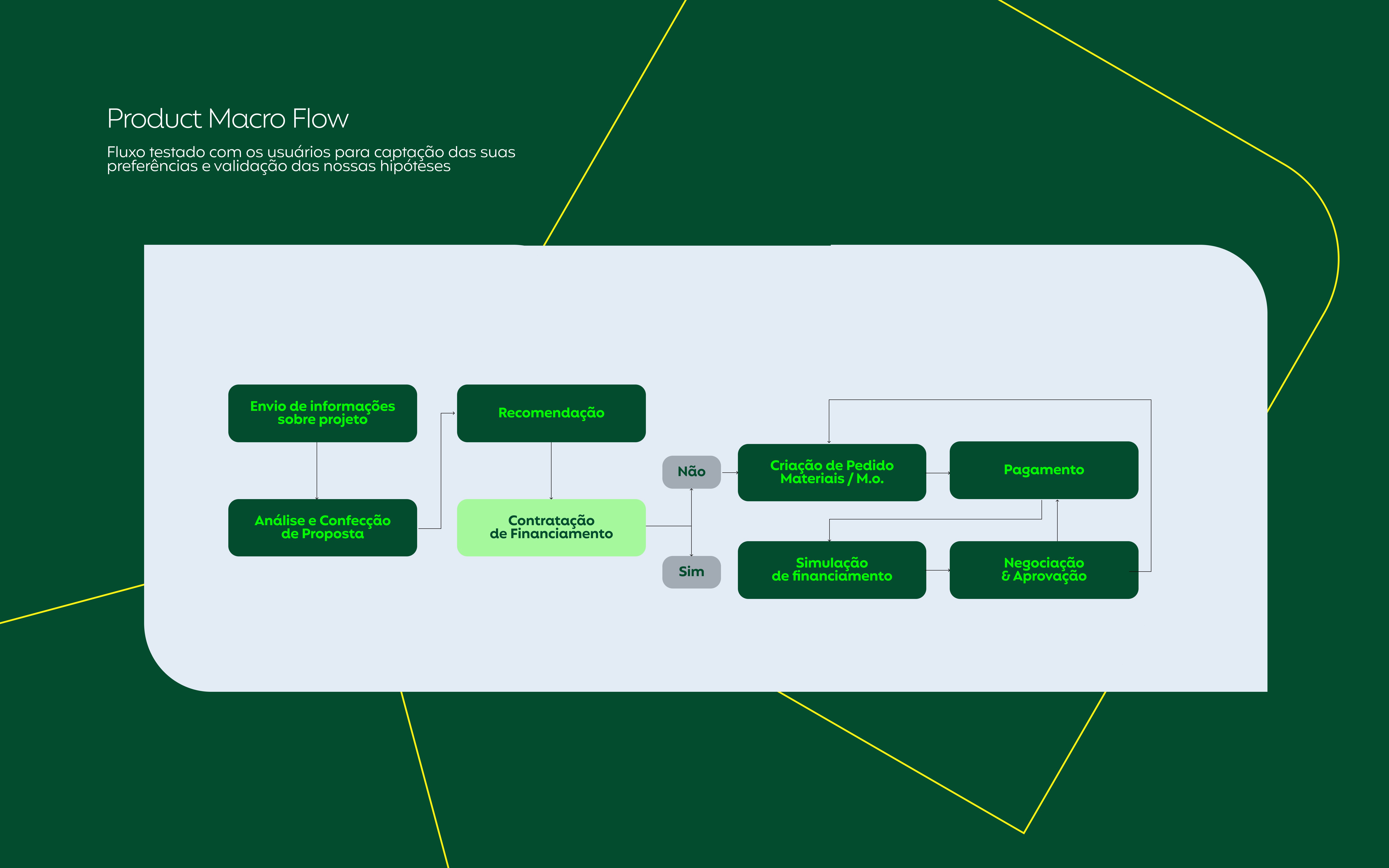

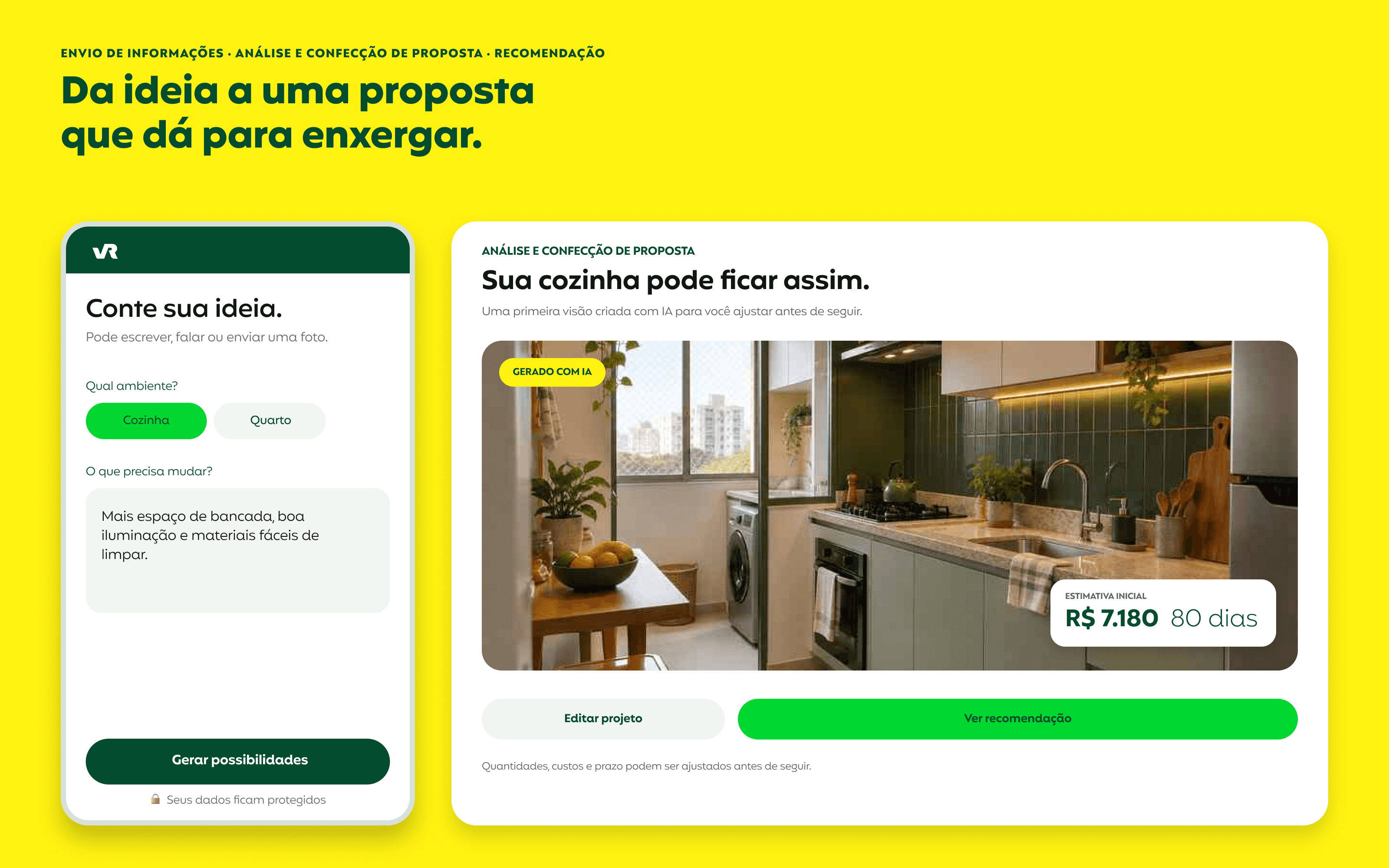
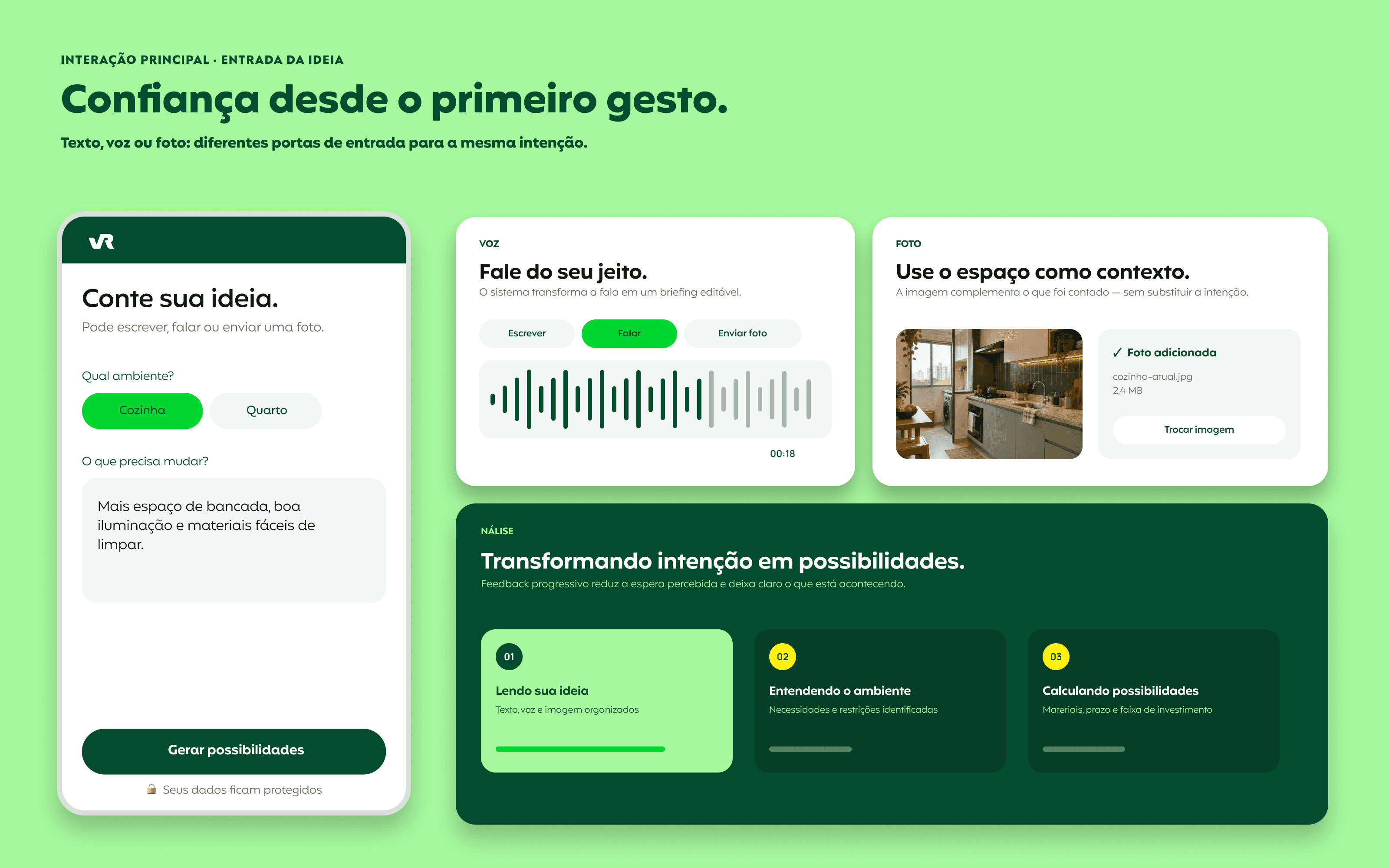

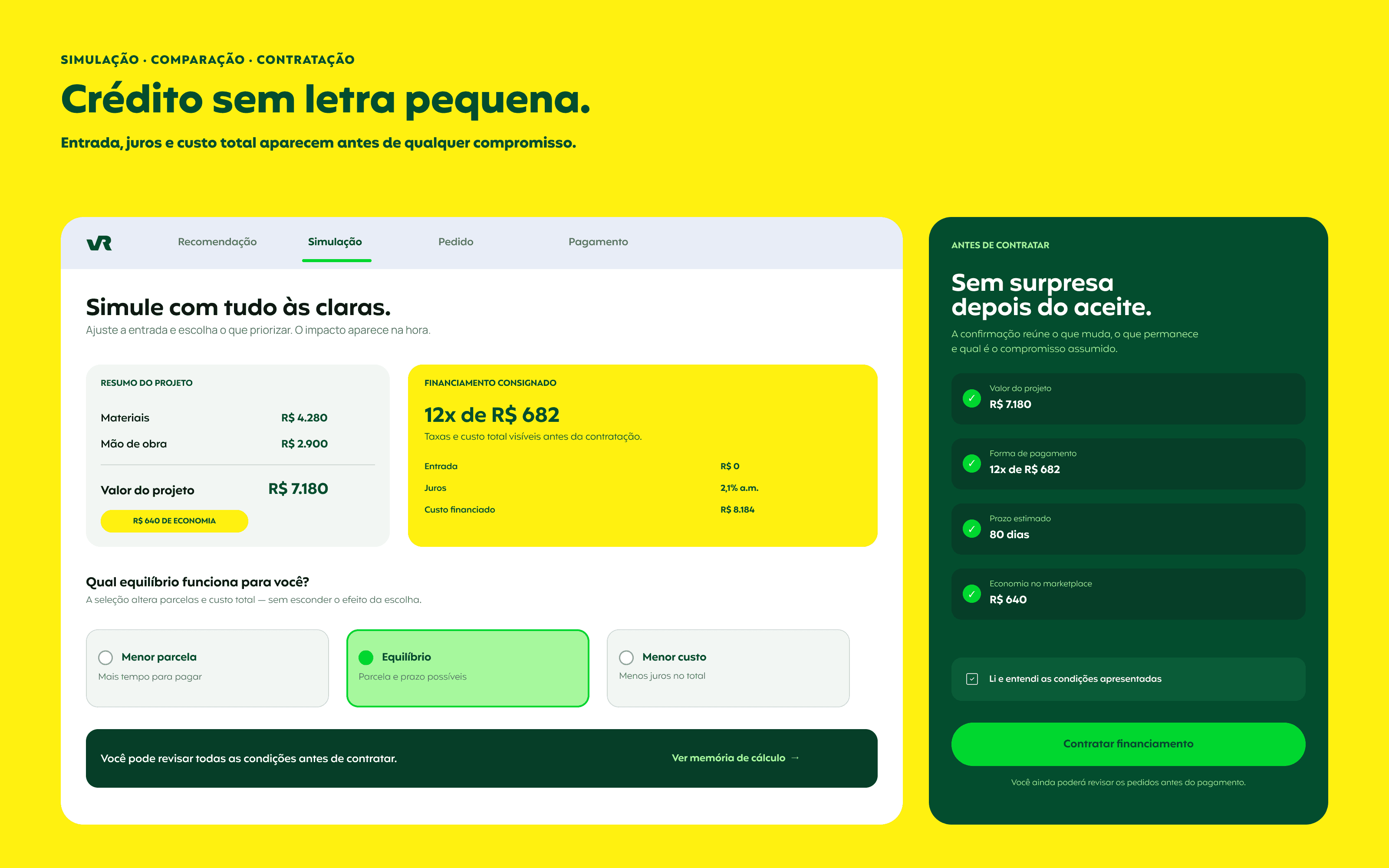

THE CHALLENGE Renovations are stressful even for high-income households. For workers in class C/D, they’re often postponed indefinitely because: • budgets are tight and unpredictable • planning is hard (materials, labor, timelines, trade-offs) • trust is fragile (fear of scams, hidden costs, delays) • financing is intimidating (interest, conditions, transparency) Our job: define an MVP that was credible, simple, and valuable enough to justify adoption inside VR’s app — and create a path to validate it quickly. WHAT WE DID 1) Turned a “big bet” into an MVP thesis We translated the ambition into a product vision with a sharp wedge: Start with low-cost renovations + predictable budgeting + guided execution (then expand later into a broader “home services” ecosystem) This MVP framing helped align stakeholders, focus validation, and prevent the concept from becoming a marketplace-with-everything. 2) Tested the riskiest assumptions first Instead of jumping into features, we pressure-tested the core bets: Do workers actually want renovation support from VR? Does the VR app work as a distribution channel? Is financing the unlock — or a blocker? What creates trust: people, AI, or both? We ran concept validation and early experience tests with real users to learn what they considered credible and worth adopting. 3) Designed the experience as a guided journey (not “a store”) The winning structure was not “browse products.” It was: Describe → plan → budget → simulate financing → buy → execute The experience needed to feel like a “calm expert friend” — reducing cognitive load and making the next step obvious. 4) Used generative AI as a product advantage (and a growth lever) This was one of the first times we used genAI intentionally as: a value feature: faster planning + clearer visualization + less overwhelm a trust mechanism: structured recommendations + second opinions a GTM experiment: using AI-led flows to capture interest and qualify leads early (before full build) In other words: AI wasn’t decoration — it was the shortcut to “real value” without a heavy operational machine.
Hungry for more?